Personalized Content Marketing: Beyond Templates to Conversion
Picture yourself in your client’s shoes for a second:
You get an email that sounds like it could’ve been sent to just about anyone else. Imagine how this would feel.
Whatever your answer is, it’s why your nurture emails aren’t getting the open rates or responses they’re supposed to. After all, nobody wants to feel like just another client in a spreadsheet.
If you want to lift those conversion rates, there’s one fix — speak to YOUR client and only your client with personalized content marketing.
Personalized content marketing kicks templated approaches in the teeth any day because of how it makes your client feel — important. And in this guide, we’re doing you a solid by showing how you can pull this off.
Templates vs. Personalization: The ROI Gap
Sure, emails can boost conversion numbers by up to 2.4%, but writing one email and hitting “send” to dozens of prospects won’t get you the rates you’re after.
It might seem costly and time-consuming, but there’s value in crafting personalized messages.
According to industry estimates, personalized email lines and messaging get:
The last one is huge. So, if your projected ROI from templated emails is about as promising as a Padres shot at a World Series, then you have some serious work to do.
Our Three-Layered Approach to Segmented Content and Email Success
Where do you start if you’ve been blasting the same “Just checking in.” email to everyone from startup founders to Fortune 500 CMOs?
As with niche marketing, hitting conversion numbers is all about tailoring your message. To do this, you’ll need a three-step approach — like our three-layered content segmentation approach.
Here’s how to build a segmentation system that makes your messages feel one-on-one instead of one-to-many.
1. Firmographics and Industry
First of all, who are you sending your emails to?
Are you targeting SaaS companies with five employees or law firms with five hundred?
Answering this question is a must because industry and company size can change everything, from your tone to the problems you highlight. Think about it:
A SaaS founder might care about churn rates, while a manufacturing CEO worries about supply chain bottlenecks.
It’s all about knowing your audiences and understanding their day-to-day struggles.
2. Buyer Stage
There’s likely already a bunch of prospects in your email list, but not all of them are ready to pull out their credit cards and checkbooks.
Don’t craft pushy emails that force a sale or conversation. Instead, you’ll want to meet your readers and prospects wherever they are in their buyer journeys.
To do this, audience-centered
copywriting will be your secret weapon. With well-crafted emails that speak to different buyer journeys, you can:
- Nudge early-stage leads with educational content
- Convince mid-stage prospects with case studies
- Seal the deal among willing buyers with strong CTAs
3. Trigger Events
These are the little green lights telling you “now’s the time.”
Maybe a company just got funding or hired a new CMO. Or maybe a new product was launched.
These moments give you a reason to reach out with highly relevant and segmented content that feels like it was crafted that morning just for them.
Pull Off Your Personalized Pitches With This Tech Stack
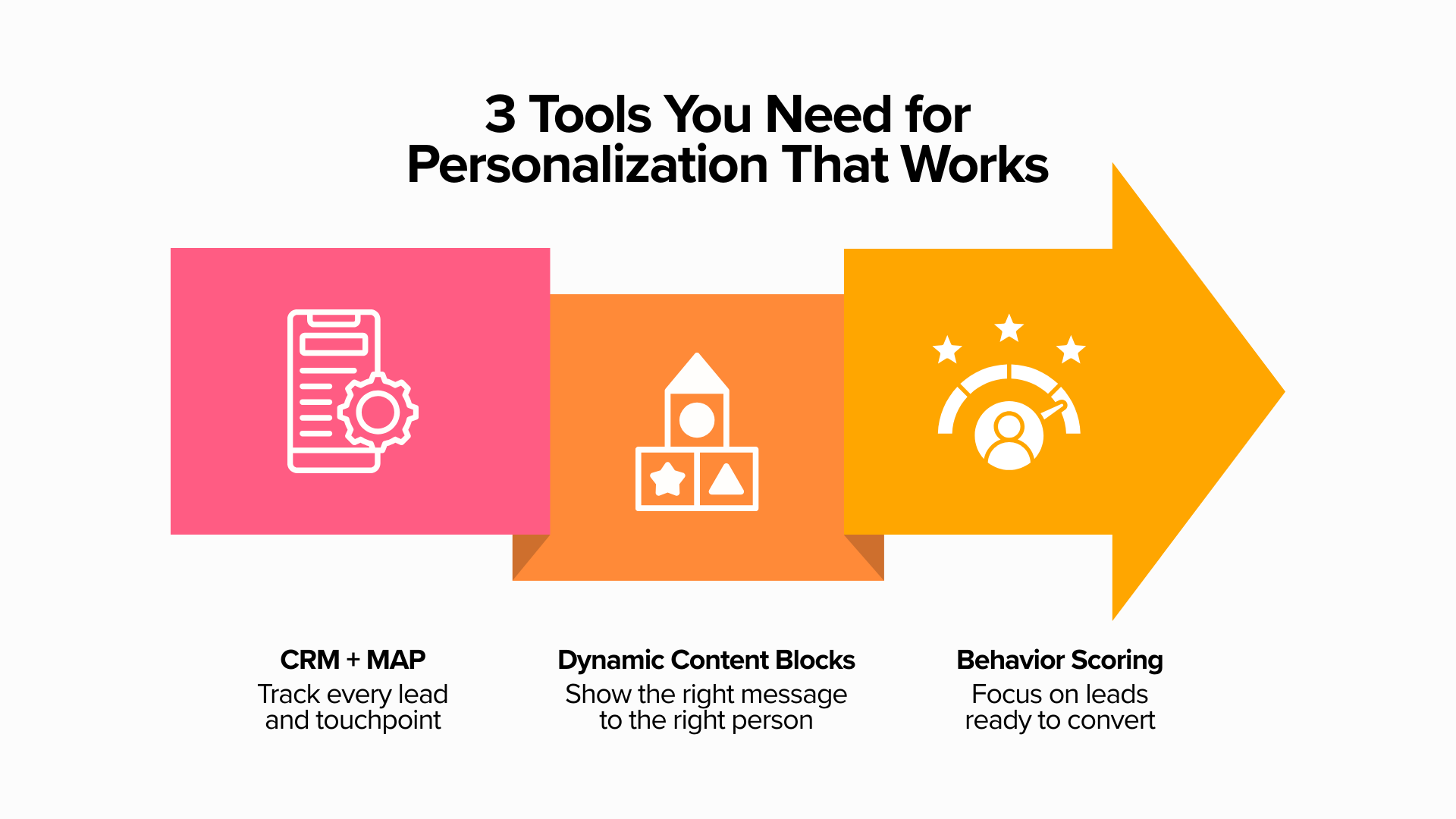
The market is filled with pricey tools that “promise” to up the ante on your personalized content marketing. But believe it or not, you don’t need to drop six figures (or four or five, for that matter) to make personalization work for your emails.
All you need are these three must-have tools that talk to each other and make your life easier:
- CRM + MAP: Your customer relationship manager (CRM) and marketing automation platform (MAP) should be best friends. Together, they track who’s who, where they are in the buyer journey, and what to send them next.
- Dynamic content blocks: These let you swap out headlines, images, or CTAs on the fly based on a person’s profile or actions — the backbone of dynamic content marketing.
- Behavior scoring: A simple point system that tells you which prospects are just curious and which are ready for a sales call, so you don’t waste time chasing the wrong ones.
A Case of “Maybe Later” to “Tell Me More”
Do you want to see personalized content marketing in action?
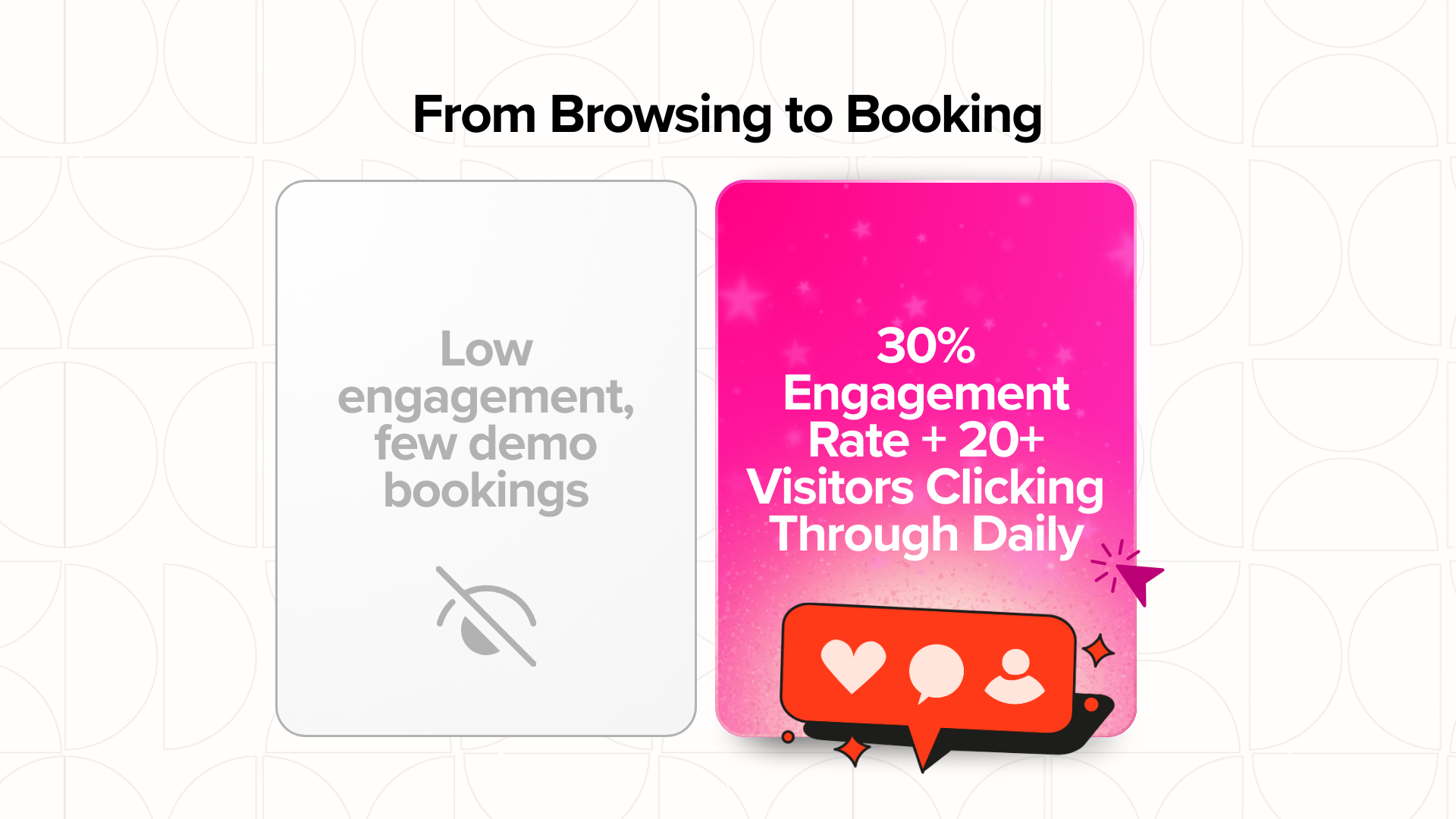
A local chiropractic practice came to us for digital marketing services. According to this client, there were plenty of visitors on the site, but hardly anyone was booking demos or engaging with the brand in any meaningful way.
So, we swapped their generic nurture flow for a targeted content personalization strategy that blended industry-specific pain points with well-timed offers.
And, lo and behold, engagement skyrocketed to 30%, with over 20 unique visitors coming to the site and clicking through its offerings daily.
Get Started With This 30-Day Checklist
If you want to see results fast, here’s your first month’s to-do list. Keep it simple, get it done, and watch the lift happen.
- Data audit: Clean up your CRM so you’re working with accurate, usable info. After all, it’s as the saying goes — garbage in, garbage out.
- Persona refresh: Buyer personas need to be up to date. Update them with current challenges, goals, and language straight from your audience.
- Dynamic modules: Add swap-in content blocks for headlines, images, or CTAs so each segment sees what’s most relevant.
- A/B subject lines: Test two subject lines per send to see which gets the clicks. Then use that insight to sharpen the next round.
If you need a team that can do all this (and more) while jacking up your conversion numbers, we’re just a call away in San Diego.
Reach out and let’s reach audiences who’ll want to hear your message and act on it.
FAQs
Do I need expensive tools for personalization?
They’re nice to have, but you can get a lot done with a solid CRM, a marketing automation platform, and some dynamic content marketing features. It’s less about cost and more about making sure your tools actually integrate and play nice together.
How much data is “enough”?
You don’t need a 200-field profile on every lead. Start with basics like industry, buyer stage, and a few key behaviors, then layer in details as you go.
Remember:
If the data allows you to segment properly, it’s enough.
Will personalization hurt deliverability?
No, just be sure to:
- Avoid spammy words
- Send from a real address
- Keep your lists clean
Personalization done well can actually boost engagement — which is what you want, right?