
Brand Consistency Across Digital Channels in 2026: Fix the Gaps That Cost You Trust
It takes less than three seconds to lose a customer. Besides slow page loading times, the easiest way to get one to scroll past you is by not having brand consistency across digital channels.
The more different your website or socials look from each other, the less legit you’ll look. Don’t worry; we’re giving you an actionable system to develop a unified brand presence this 2026 (and beyond).
What Brand Consistency Actually Means (Not Just “Same Logo Everywhere”)
When we talk about consistent branding online, we mean more than just what your customers can see.
Is your social media messaging consistent with what’s on your hero page? Are your FAQs answered with the same level of formality (or informality) as your communications and blog posts?
All of these elements make up your brand identity across platforms. If one looks like a stranger to the other, consider your image fragmented, and in the eyes of your customers, untrustworthy.
Just check out how brands like Nike and Coca-Cola have crushed it over the years. Besides having their logos on every bit of digital real estate they’ve acquired, these two brands have kept their messaging consistent — even when, at times, their content is different on some platforms.
Compare that with a brand that has playful CTAs on the landing page but sounds like a stiff SaaS founder on social.
The difference is worlds apart — and customers can see it.
Why Brand Consistency Drives Revenue
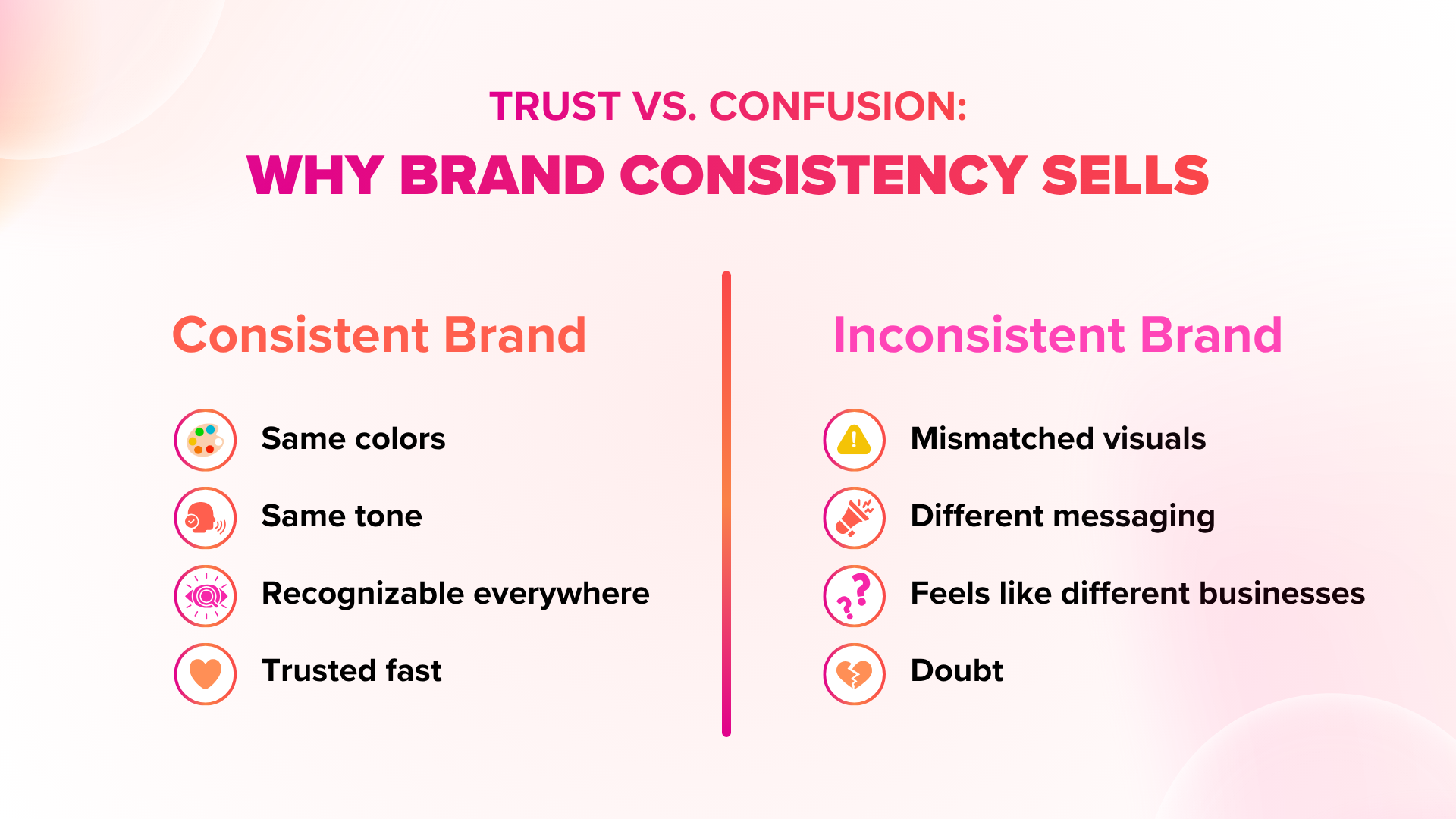
Getting clicks and sales comes down to this equation: Trust + Recall.
To get both, you’ll need two things, and we’ll start with brand consistency across digital channels. According to a 2026 report, messaging consistency delivers as much as 23% revenue for brands.
For you, that statistic means keeping your visual branding and messaging on the same page across your marketing, site, and socials.
Speaking of channels, the next half of the equation is recall. The more touchpoints you have, the more opportunities your brand has to be seen and interacted with.
Go ahead and be on as many platforms as possible. Again, keep your messaging and branding consistent. Otherwise, you’ll lose trust, which in turn causes you to miss out on opportunities.
If you sound and look different in two channels, you’ll appear sketchy. As a result, don’t expect prospects to trust you (or even check you out on your other channels).
The Core Elements of a Consistent Brand System (What To Align Across Platforms)
You now know what brings in trust and revenue. Now let’s talk about what you need to reel both in.
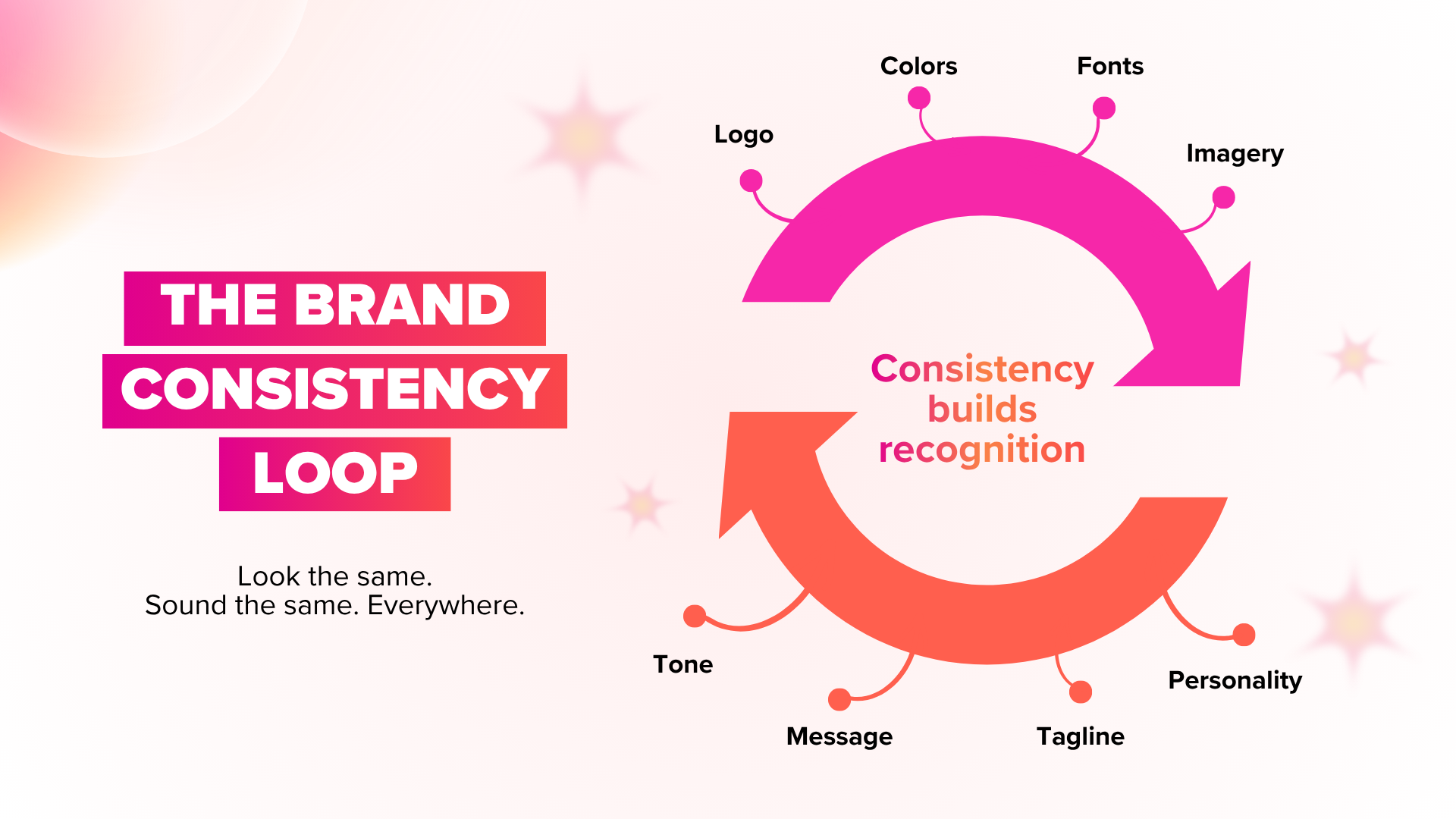
Assets are only part of your digital brand integration strategy. To establish brand consistency across digital channels, you need to align your visual identity to your messaging.
What People See: Your Visual Identity
Think of your visual identity as what your customers will see and recall. Right off the bat, this includes:
- Logo usage: Use the same logo or approved variations only. Avoid stretching and color swaps.
- Color palette: Use exact hex codes everywhere. “Close enough” is never close.
- Typography: Stick to the same font pairings across your website, social graphics, and emails.
- Imagery style: Pick a look and stay with it. Go bright and candid or dark and corporate, but not both.
What People Experience: Your Brand Voice and Messaging
Once your logo makes an impression, your brand voice and messaging does the rest. Dial them in with:
- Tone: Casual, formal, bold, or reserved — choose one and commit.
- Core messaging: Your value proposition should not change depending on the platform.
- Personality: If you sound confident on your website, don’t sound unsure on socials.
This is what builds trust after the first impression.
How To Audit Your Brand Consistency in Five Minutes: Website Design, Socials, and Everything in Between
You have the pieces. Here’s a five-minute test to see if everything lines up:
- Open your core channels side by side: Pull up your website, Instagram, LinkedIn, and a recent email. Do they feel like the same business?
- Check your visuals: Look at your logo, colors, and fonts. Inconsistent visuals break your unified brand presence fast.
- Read your messaging out loud: Compare your homepage copy, social bio, and email copy. If your tone sounds professional on your site, laid-back on social, and rambling on LinkedIn, your messaging and copy needs work.
- Look for friction points: Do your social graphics use different styles than your website? Does one channel feel polished while another feels rushed?
- Get an outside opinion: Ask someone unfamiliar with your business if everything looks connected. If they hesitate, your brand identity across platforms needs work.
Once you perform these steps, one of these red flags will probably show up:
- Inconsistent color across your channels
- Massive variations in your tone and messaging
- Same-but-looks-different logos
Building Brand Consistency From Logo + Website to Every Platform
You’ll always be playing catch-up if your brand consistency, website design, and socials were done separately. To keep everything (and everyone) on the same page, here’s how you can unify your digital brand integration:
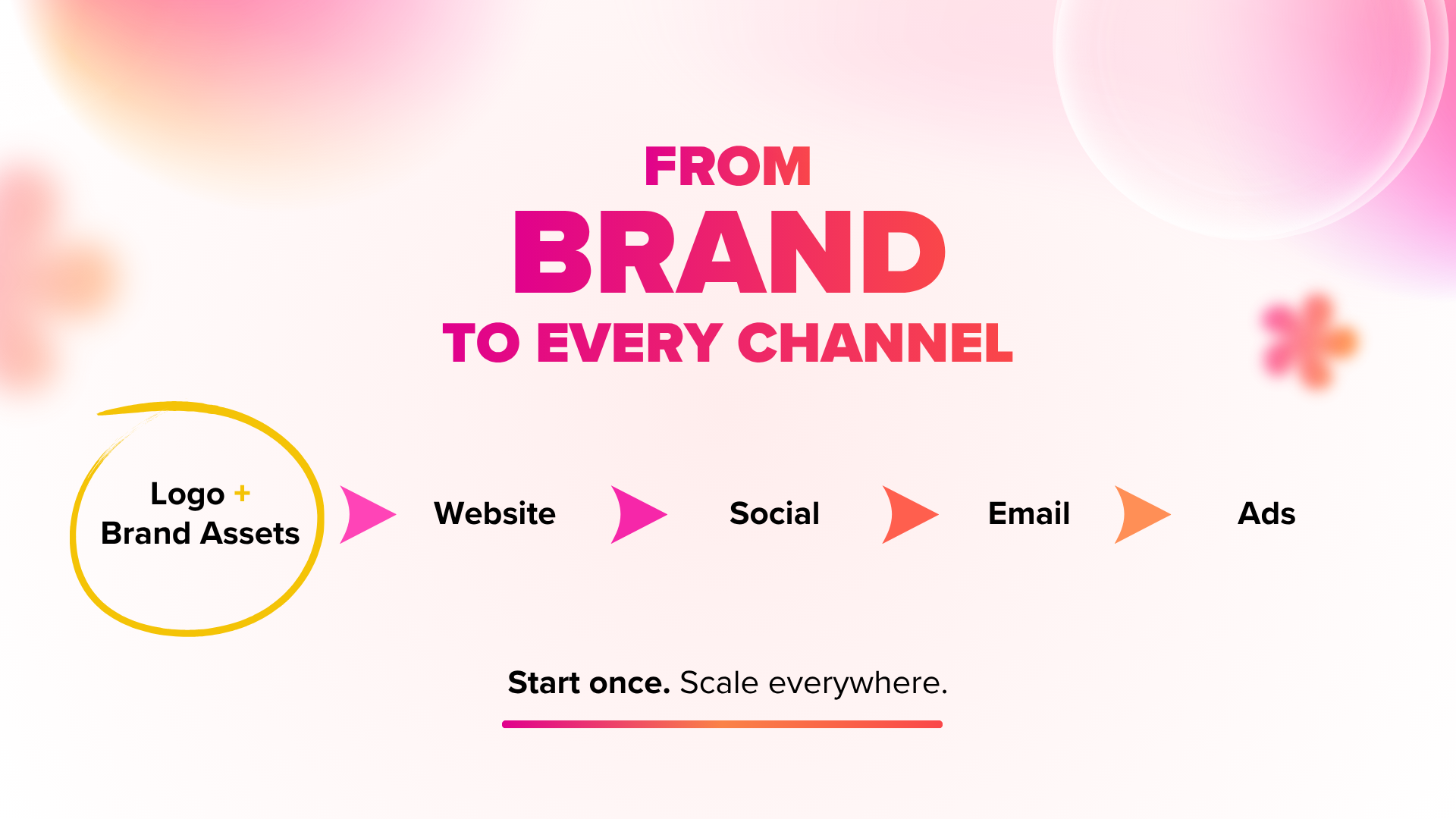
- Logo and brand assets first: Your logo, color palette, and typography should be defined together. These become your source of truth for consistent branding online.
- Website first: Your site should apply those exact elements. Buttons, headers, and layouts should reflect your brand consistency website design, not guesswork.
- Extend to every channel: Once your website is aligned, your social graphics, emails, and ads should pull from the same system.
In short, your flow should be: brand identity, then website and social, then to email and ads.
Each step builds on the last to create a unified brand presence.
Maintaining Your Brand Identity Across Platforms
The bigger your brand gets, the more people get involved, which adds complexity over time.
Here’s how you can maintain brand consistency across digital channels.
Stop One-Off Design Work
With different designers for different platforms, your look gets fragmented. One system and partner keeps your brand identity across platforms intact.
Create Simple Brand Guidelines
Document your logo usage, hex codes, fonts, and tone. A one-page guide is enough to protect your unified brand presence.
Scale With Templates
Build reusable templates for social posts, emails, and presentations. They help you keep consistent branding online without slowing your team down.
Audit Your Brand Identity Across Platforms Regularly
Last but not least, check your channels every other month or quarterly. Even the smallest inconsistencies add up and weaken brand consistency across digital channels over time.
The Question: To Invest or Not To Invest in Brand Consistency?
These signs are a dead giveaway that it’s time for a brand consistency upgrade:
- Your channels don’t match: Your website, social, and emails feel like different companies.
- You’re losing trust before the pitch: There’s something off about your brand consistency across digital channels if people hesitate, ask clarifying questions, or drop off.
- Your team keeps asking for direction: If no one knows which colors, fonts, or tone to use, your brand identity across platforms isn’t defined.
- You’re expanding your marketing: More channels without a system only creates more inconsistency no matter how much marketing money you burn.
There are times when it’s better to hold off on investing in brand consistency, including:
- Not having a clear offer (yet)
- Being new to the San Diego scene
- Much of your marketing is on one channel
We get it if you’re unsure. We’re a call away if you need straight answers into whether or not a brand consistency upgrade is for you.
Reach out for a free consultation, and give your brand a face and voice customers will trust and buy from.
FAQs
Do I Need To Redesign My Entire Website To Improve Brand Consistency?
Not always. If your brand elements are already defined, you can realign your website to match them. If your branding and site were built separately, a redesign may be the cleaner fix.
What’s the Difference Between Brand Guidelines and a Brand Style Guide?
They serve the same role. Both define how your brand should look and sound across platforms, including logo usage, colors, fonts, and tone.
How Do I Keep My Brand Consistent When Working With Freelancers or Contractors?
Give them clear guidelines and approved assets. Without that, each person will interpret your brand differently and create inconsistency.
Can I Adapt Content for Different Platforms Without Losing Consistency?
Yes. The format can change, but your tone, visuals, and messaging should stay recognizable across every channel.
What’s a Realistic Budget for Building Brand Consistency Across My Channels?
It depends on how much needs fixing. Some businesses need alignment work, while others need a full brand and website system built together.